Fast Food Minimum Wage: Why Smaller Chains Felt It First
A study of California's $20 fast food minimum wage found no statewide job effect, but smaller chains lost about 20% of jobs. What hourly employers can do.
By ReadyATS Team · · 5 min read

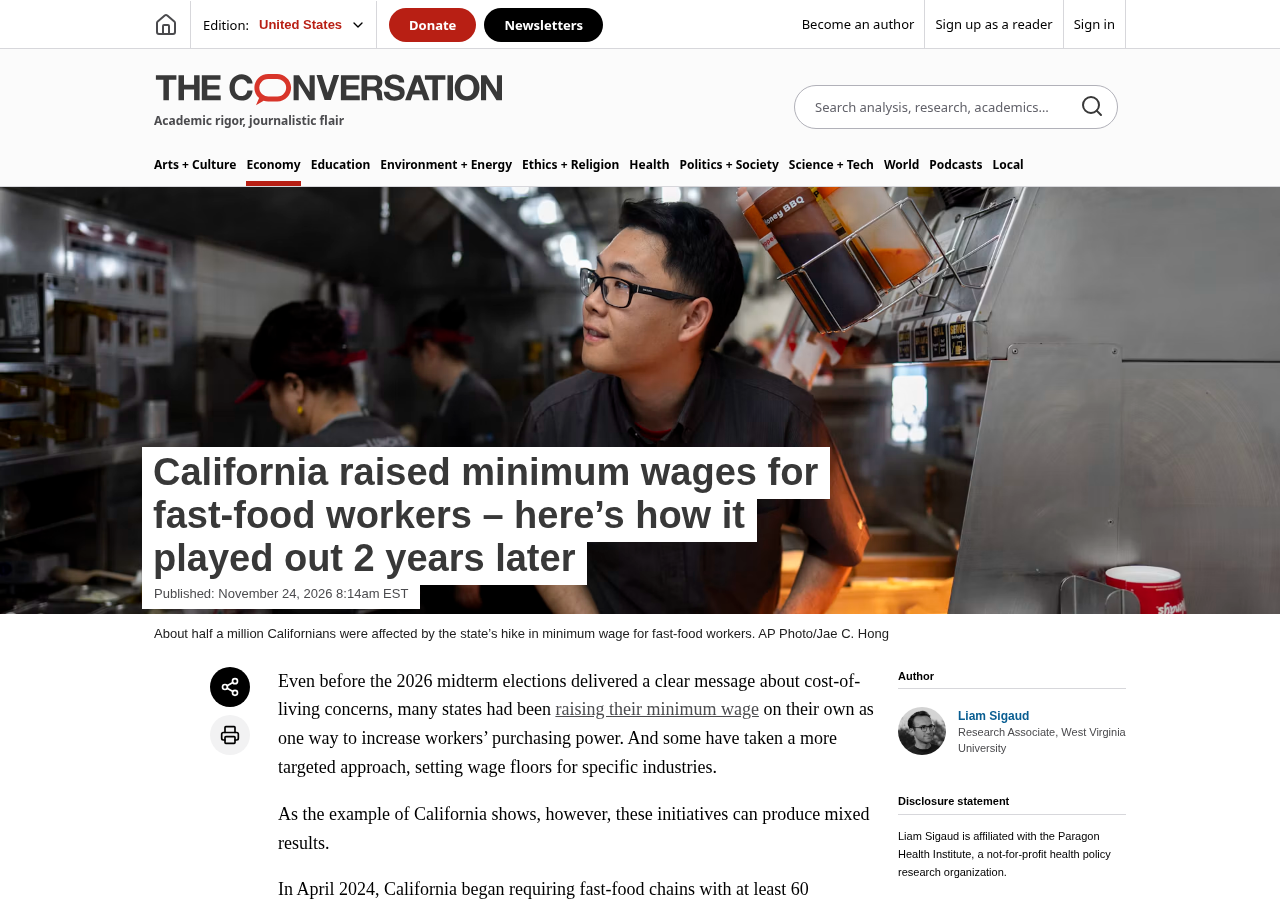
California's $20 fast food minimum wage has now been in place for more than two years, and a new study shows its effect depends on the size of the chain. Statewide, the researchers found no statistically detectable change in fast food employment. Among the smaller chains covered by the law, employment fell by roughly 20% (NBER Working Paper 35749; The Conversation, November 24, 2026).
Why now: co-author Liam Sigaud notes that 16 states will raise their minimum wages across the board on January 1, 2027. If you run hourly teams in one of those states, the new floor arrives in about five weeks. This post looks at what the study found and how a smaller operator can make each hire count. It pairs with our free job interview template, which helps every location interview the same way.
What the study measured
California's law, known as AB 1228, took effect April 1, 2024. It set a $20 hourly minimum for workers at limited service fast food chains with at least 60 locations nationwide, including franchises. The statewide minimum at the time was $16.
Economists Vitor Melo, David Neumark, Liam Sigaud and Gary Wagner used a database that records business locations by name, with employee counts, each year. That let them identify which chains the law covered and track outcomes from 2019 through 2025. They split the covered chains into two groups: the 20 largest, which hold about 60% of covered jobs, and the 261 smaller ones.
What the researchers found
- Statewide: no statistically detectable effect on employment, and no change at restaurants that stayed open.
- The 20 largest chains: no detectable effect on any measure the team tracked.
- The 261 smaller chains: employment fell roughly 20%, the number of locations dropped about 10%, new openings fell 17% to 20%, and closures rose 9% to 21%.
The drop came almost entirely from chains ceasing to operate in California, not from staffing cuts at the locations that remained. The authors point out that the biggest chains tend to be the most automated and that smaller chains likely lack the scale and pricing power of national brands. They also caution that the results cover a short period and that longer run effects could differ.
The debate for operators
One number says nothing happened. The other says a lot happened. The study does not try to settle the wider argument about wage policy, and neither do we. What it does show is that cost changes land hardest on operators with the least room to absorb them.
Note that "smaller" here still means chains with 60 or more locations. If you run five or fifteen units, your margin for wasted labor spend is likely even thinner. You cannot set the wage floor. You can control how much time and money goes into each hire.
Five ways to make every hourly hire count
1. Put the real pay in every job post
State the hourly rate in the post. Candidates who apply already know the number, so fewer interviews end in a pay mismatch.
2. Reply within one business day
Hourly applicants often apply to several jobs at once. A fast reply and an interview offer keep you in the running before another employer calls first.
3. Call back past applicants first
Before you pay for new posts, look at people who applied in the last few months, especially strong runners up. They already know your brand.
4. Interview the same way at every location
Use one short scorecard so every manager asks the same questions and rates on the same scale. Our phone screen questions can cut weak fits before anyone books an in person slot.
5. Cut interview no-shows
Send the interview time by email and text, then a reminder before the slot. Every no-show is a manager's paid hour spent waiting.
A hypothetical example
A hypothetical eight location burger chain in a state with a January raise reviews its hiring before the new rate starts. It adds the hourly rate to every post, sets a one business day reply rule, and texts past applicants before posting. Each manager uses the same scorecard, so the owner can compare candidates across stores.
Why ReadyATS
ReadyATS is built for small and mid-size teams that hire hourly staff across a few locations:
- Indeed, ZipRecruiter and job board feeds, plus a custom career landing page.
- Talent pools that save searches so you can re-engage past applicants before you post again.
- 1:1 text messaging with an opt-out register, so replies reach candidates where they answer.
- Interview scheduling with Google Meet or Zoom links, sent with the invitation.
- Unlimited users at $0 per user, so every store manager works from the same system.
- Checkr background checks from the candidate page on the Pro plan, plus Checkr Identity Verification through the same integration.
See how restaurant teams use it on our QSR hiring page. Plans start at $199 a month. No long-term commitment, cancel anytime.
You cannot set the wage floor. You can stop paying for a slow hiring process.
Starting ReadyATS in 15 min Now
FAQ
What is California's fast food minimum wage?
Since April 1, 2024, California has required limited service fast food chains with at least 60 locations nationwide to pay at least $20 an hour.
Did the $20 wage reduce fast food jobs in California?
The NBER study found no statistically detectable effect statewide and none at the 20 largest chains. At the 261 smaller covered chains, employment fell roughly 20%, mostly because chains ceased operating in the state.
How many states raise their minimum wage on January 1, 2027?
According to the study's co-author, writing in The Conversation, 16 states will raise their minimum wages across the board on January 1, 2027.
How can a small restaurant lower its cost per hire?
List the pay in every post, reply within a day, re-engage past applicants first, use one scorecard at every location, and send reminders to cut no-shows.